
Mindset · Power · Sovereignty
The Most Dangerous Man in the Room
Is the One Who Needs Nothing
A Principle of Quiet Power. Here Is How to Build It.
Power does not belong to the loudest man in the room. It belongs to the one who could stand up, walk out, and lose absolutely nothing.
The Question Most People Never Stop to Ask
Most people spend their lives quietly negotiating. They nod in meetings they disagree with. They laugh at jokes that are not funny. They refresh their phones waiting to see whether someone approved of what they just posted.
Almost every decision, whether about career, relationship, or opinion, is filtered through a single invisible question: What will people think?
Now imagine someone who has stopped asking it entirely.
A man willing to be misunderstood. A man who can walk away from applause, recognition, and approval without hesitation. A man who is genuinely comfortable standing alone.
When people encounter such an individual, something unusual happens. The normal tools of social influence stop working. And those who rely on those tools feel it immediately: a quiet, unsettling loss of leverage they cannot explain.
This is where the psychology of real independence begins.
A Scene of Power That Has Played Out for Centuries
Florence · Late Evening
The political elite gather around a long table. Voices compete. Promises are traded. Alliances shift beneath polite smiles. Every man in the room wants something: favor, influence, protection, advancement.
Except one.
He listens more than he speaks. He does not chase approval or rush to defend his reputation. When a proposal runs counter to his principles, he declines calmly and leans back in his chair.
The others grow uneasy. They cannot flatter him into agreement. They cannot threaten him with exclusion. They cannot tempt him with prestige. For the first time in the room, power has no handle to grab.
Political thinkers throughout history noticed this unsettling dynamic: the individual who cannot be bribed by reward or frightened by loss becomes extraordinarily difficult to control. The mechanism is simple.
Power often belongs not to the person who wants the most, but to the person who needs the least.
This small shift in psychology changes how a person moves through every environment they enter.
The Law of Strategic Detachment
Why Needing Less Gives You More
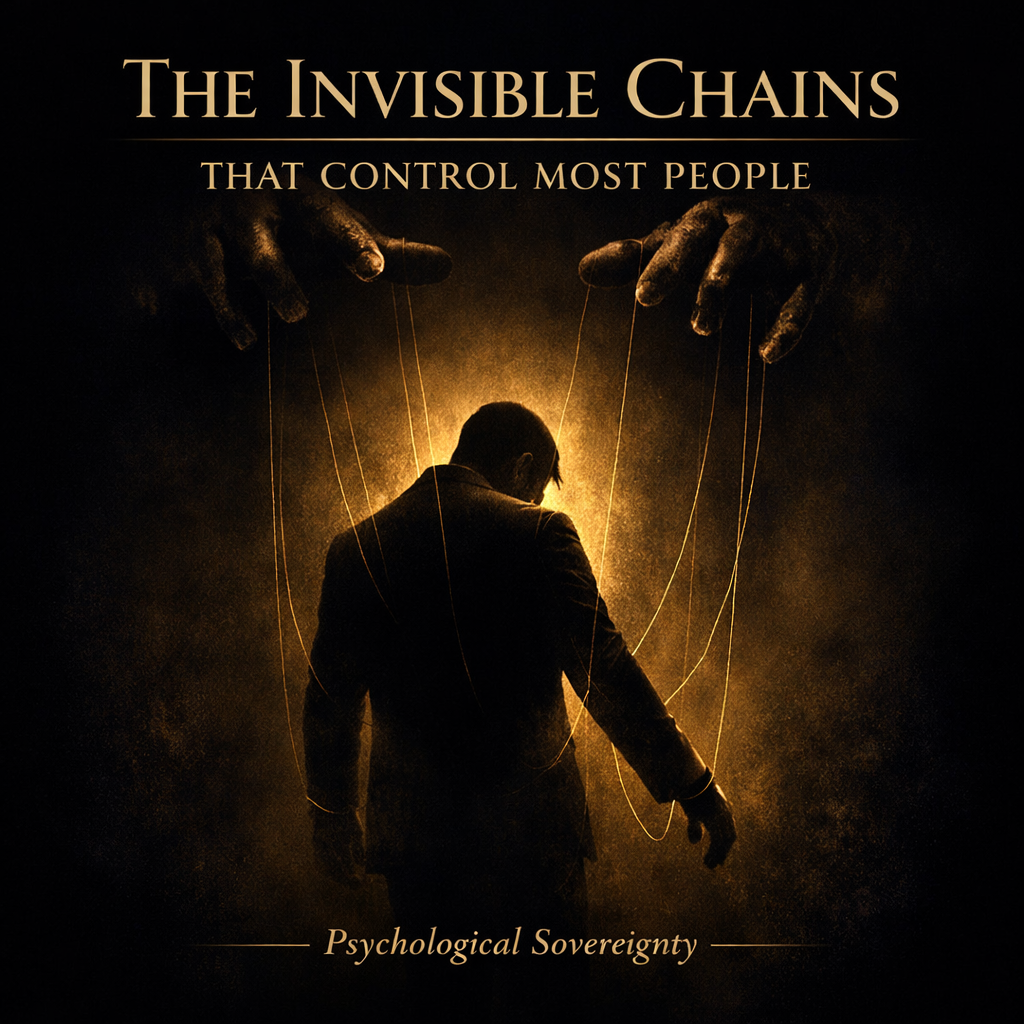
Most human behavior is governed by invisible attachments. Approval, recognition, comfort, security, and the fear of rejection quietly steer decisions every single day. These attachments create leverage. Wherever there is leverage, there is control.
Remove the attachments. The leverage disappears.
The person who needs nothing from external validation operates outside the standard hierarchy of social influence. Praise cannot steer him. Incentives cannot purchase his loyalty. Threats of exclusion land without impact. His decisions originate from internal standards rather than the shifting approval of others.
In environments where most people bend their values for recognition, the man who needs nothing remains strangely immovable. His absence of hunger for rewards does not make him passive. It makes him sovereign.
10 Ways This Independence Reshapes Every Room He Enters
1. He Cannot Be Controlled With Rewards
Modern society runs on incentives: promotions, praise, status signals, and social approval operating as invisible levers guiding behavior. Institutions depend on this structure. The man who needs nothing disrupts it entirely. Because he does not measure his worth through external rewards, no incentive system can reliably steer him. His actions are deliberate rather than transactional.
2. He Walks Away Without Negotiation
One of the rarest psychological abilities is the capacity to leave without explanation. Most people cannot do this. They stay trapped in arguments, failing relationships, and draining environments because they seek closure, understanding, or validation from the very people causing the damage.
The man who needs nothing understands a simple rule: presence is voluntary. When a situation becomes toxic or misaligned with his principles, he disengages. Not angrily, not dramatically, but decisively. Silence and departure become his final statement.
Athens · Classical Period
When Alexander the Great visited the philosopher Diogenes and asked if he could grant him any favor, Diogenes replied without hesitation: “Yes. Stand out of my sunlight.”
Alexander reportedly turned to his generals afterward and said: “If I were not Alexander, I would wish to be Diogenes.” The conqueror commanded armies. The philosopher commanded himself. That kind of independence unsettles even the most powerful people in the room.
3. Rejection Does Not Define Him
Fear of rejection governs more human behavior than most people acknowledge. Careers are chosen to impress families. Opinions are softened to avoid conflict. Opportunities are abandoned to protect reputation. The man who needs nothing breaks this psychological contract. Rejection, to him, is information rather than judgment. If an opportunity closes, he adjusts direction. If someone disapproves of him, he registers the signal without internalizing it. His self-concept is not negotiated through the approval of strangers.
4. Loneliness Does Not Frighten Him
The fear of isolation is one of the most powerful forces shaping human behavior. People stay in destructive relationships, hollow careers, and empty social circles simply to avoid solitude. The man who needs nothing reverses this entirely. He sees solitude as a strategic advantage, not a punishment. In silence, clarity emerges. Without constant social noise, he can observe patterns, refine his thinking, and understand his own motivations. Solitude becomes a laboratory.
5. He Moves With Fluidity Rather Than Habit
Most people live inside predictable patterns. Routines provide comfort, but they also expose rhythms that others can anticipate. Predictability invites influence. The man who needs nothing adapts to context rather than routine. In a negotiation, while others follow familiar scripts and defend positions out of ego, he can pause when others rush, concede small points without loss of identity, or walk away from a deal that no longer aligns with his principles. He is principled but not rigid. Because his reactions cannot be easily predicted, every dynamic begins to revolve around him.
6. Emotional Blackmail Does Not Work
Guilt, shame, and the fear of being disliked are powerful instruments of social control. The man who needs nothing is resistant to all of them. Because his identity is internally anchored, accusations, emotional appeals, and social disapproval do not distort his judgment. He can decline requests calmly and without excessive justification. Those who rely on emotional leverage find this deeply frustrating and quietly confusing.
7. Relationships Are Chosen, Not Required
When connection exists primarily to fill emotional emptiness, fear of loss dominates the interaction. The man who needs nothing participates in relationships by choice rather than necessity. Because he is genuinely comfortable alone, his presence becomes authentic rather than performative. Ironically, this independence often produces his strongest relationships. Voluntary connection is more durable than obligatory attachment.
8. Intimidation Loses Its Influence
Fear has always been a primary tool of control. Threats of exclusion, public criticism, and professional consequences shape behavior with remarkable consistency. This only works, however, when someone fears losing something they consider essential. The man who does not measure his life through titles, approval, or possessions removes this leverage entirely. His calmness in the face of intimidation often unsettles aggressors more than any confrontation could.
9. Being Disliked Does Not Disturb Him
Approval operates like an invisible currency in modern social life. Many people suppress honesty, soften positions, and perform agreeableness simply to remain liked. The man who needs nothing does not pursue this currency. He values integrity over approval. This does not make him hostile. It makes him honest. He can disagree without anxiety and speak clearly when others are performing. Authenticity replaces performance.
10. He Pursues Mastery Rather Than Attention
Modern culture rewards visibility. Social media encourages relentless self-promotion and competition for attention. The man who needs nothing ignores this spectacle entirely. Instead of chasing recognition, he invests energy in discipline, skill, and genuine mastery. Recognition, when it arrives, becomes a consequence rather than a goal.
Silicon Valley · Late 20th Century
Steve Jobs was frequently criticized, disliked, and resisted by colleagues and competitors alike. Yet his refusal to chase approval gave him something more powerful: the freedom to pursue a vision others could not yet see. Because he was less dependent on consensus, he was free to reshape entire industries. Detachment from approval often creates the conditions for creative dominance.
People notice those who are not trying to be noticed. The absence of performance is itself a form of presence.
A Question Worth Sitting With
If approval disappeared tomorrow, if the applause stopped and recognition never came, would your decisions remain the same?
Most people discover, honestly, that many of their choices are quietly guided by the desire to be accepted. The man who needs nothing has already confronted this truth. He has learned to act from principle rather than the shifting approval of others.
Would you still take this action if no one would ever know you had taken it?
Would you still hold this position if everyone around you disagreed?
Would you still remain in this situation if leaving cost you nothing socially?
These three tests reveal where external dependency has quietly replaced internal sovereignty.
How to Build This Independence, Practically
The Biology Behind Psychological Sovereignty
Here is the uncomfortable truth most mindset content refuses to acknowledge: you cannot think your way to genuine detachment if your biology is working against you.
Psychological independence is not purely a choice. It is, in large part, a physiological state. Chronic sleep deprivation elevates cortisol and impairs the prefrontal cortex, the precise region responsible for impulse control and emotional regulation. A depleted, dysregulated nervous system defaults to threat-response mode. In that state, rejection feels catastrophic, disapproval feels dangerous, and solitude feels like punishment. Not because of weakness of character, but because of unresolved biology.
The ancient instinct for social belonging is hardwired and biochemical. Rewiring it requires more than a decision. It requires building the physiological foundation that makes detachment possible.
- Sleep architecture: Deep, consistent recovery lowers cortisol and restores the prefrontal function needed to respond rather than react. A man running on poor sleep is neurologically incapable of full emotional sovereignty.
- Physical training: Deliberate exposure to controlled physical stress builds nervous system resilience. This is the same resilience required to absorb social pressure, criticism, and conflict without flinching.
- Nutritional optimization: Neurotransmitter production, hormonal balance, and inflammatory load directly affect emotional regulation. The body that is chronically inflamed or nutritionally depleted broadcasts stress, and environments respond to that signal.
- Deliberate solitude: Regularly removing yourself from social noise trains the nervous system to associate aloneness with clarity rather than threat. Solitude stops being something you endure and starts being something you seek.
Build the biology first. The psychological independence you want follows from the physical foundation you build.
The Quiet Power of Not Needing
Return to that room in Florence.
The conversation continues. Voices compete for influence. Promises move like currency across the table as every man calculates what he must offer to gain something in return.
But one man has already leaned back in his chair. He does not rush to speak. He does not defend his reputation. He simply observes.
Because unlike everyone else at the table, he does not need anything from it.
Most lives are tethered to something: approval, recognition, possessions, relationships, or the fear of losing them. These attachments make behavior predictable. Predictability gives the world leverage over you.
The man who needs nothing operates outside that structure entirely. Praise does not steer him. Rejection does not shake him. Pressure does not bend him. His decisions come from principle rather than negotiation.
Such a man rarely appears powerful in the traditional sense. He does not compete for admiration. Yet people feel his presence immediately, because he cannot be pushed, pulled, or traded like everyone else.
Power does not belong to the loudest man in the room. It belongs to the one who could stand up, walk out, and lose absolutely nothing.
“The most dangerous man is not the one who wants power. It is the one who no longer needs anything from those who hold it.”
BrianVoltrX · Biohacking · Mindset · Sovereignty
Ready to Build Your
Psychological Independence?
Most people try to fix their mindset while leaving their biology broken. Real sovereignty begins at the cellular level. It requires the sleep, training, nutrition, and recovery protocols that make genuine detachment a permanent state rather than a performance.
Biohacking
Sleep optimization, hormonal balance, cognitive performance protocols, and evidence-based supplementation.
Mindset Coaching
Rewiring the reactive patterns and approval dependencies that quietly govern your decisions before you even realise it.
Fitness
Deliberate physical adversity that builds the nervous system resilience you need in every arena of life.
Nutrition
Fuelling performance, hormonal health, and cognitive clarity through food as a foundational tool, not an afterthought.
Book a Discovery Call
Biohacking · Mindset · Fitness · Nutrition
In the end, the person who governs their own mind and body becomes the only person the world cannot easily rule.


Leave A Comment